Rosie Holmes, Contemplative Educator and Mentor, University of Chichester, UK.

Figure 1. Alys, Francis (2004-5) Untitled [painting]
“Sit as little as possible; credit no thought not born on the open air and while moving freely about – in which the muscles too do not hold a festival.” (Neitzsche, F. cited in Roelstraete, D., 2010:1)
On a Friday afternoon on the 28th of June 2024, a small group of members from the Contemplative Pedagogy Network met for yet another zoom meeting. However, this online meeting had a slight difference from the usual sedentary, office-bound meeting: we were gathering to go for a walk together. I wanted to offer a ‘walkshop’, inspired by ‘Street Wisdom’, where we could connect with our local geographical locations, use the motion of our legs to enable our creative thinking and bring our embodied experience into the foreground.
The 1-hour session had three simple sections:
- Gather, introduce ourselves and our particular location
- Go off for a guided walking practice, still connected to the zoom meeting,
- Re-gather and reflect.
Why walking?
My own interest in walking as a support for pedagogy began with pilot research during my PG Cert teacher training in 2014. In my role as Specialist Mentor in Higher Education (HE), working 1:1 with students struggling with a range of mental health challenges, I started going for walks with my mentees to see how this might impact the sessions. The results were very positive: students often felt more relaxed and therefore able to engage in meaningful dialogue and discussion – one of the key foundations of any learning. They also reported that being outside supported the generation of ideas for creative projects they were working on. (Holmes, 2016)
Although almost all learning environments in HE are sedentary, and modern screen-based learning further increases this tendency, walking has historically offered space for movement of the mind and body, deeper reflection and rumination. Dating back to the ancient Greek ‘parapatetics’ (“one who walks habitually and extensively” (Solnitt, 2001:15)), numerous philosophers, writers, and artists are known to have used walking as an essential aid to their creative process.
Further research led me to believe that there may be broader applications for walking and embodied learning that would support teaching and learning practices in HE. For example, walking seminars to encourage richer dialogue and discussion (Balter, Hedin & Tobiasson, 2015), integrating walking into curriculum design (Amyot, Y. cited in Mullen & Rahn, 2010:111) or even just the simple recognition that more opportunity for movement may be required for sustained attention during lectures/classes, such as encouraging students to regularly stand up or move. As well as the obvious benefits to health, this would be acknowledging that we learn with more than just our brains; by incorporating physical considerations into pedagogy, perhaps we could enable a deeper level of learning, thinking and creativity.
What is Street Wisdom?
In 2020, Dave Tullett, a fellow member of the CPN, introduced me to ‘Street Wisdom’ and we co-facilitated a walkshop at the University of Winchester. ‘Street Wisdom’ , is a non-profit organisation, founded by David Pearl, that now offers ‘walkshops’ all over the world. A fusion of mindfulness, neuroscience, imagination and wellness, Pearl has created a framework for a simple creative practice you can use as you walk. The framework is based on the proposition that the environment and people around us are full of wisdom we largely overlook or ignore. ‘Street Wisdom’, as a practice, allows participants to tune into this rich stimulus and thereby learn from their own latent wisdom. By tuning into our outer environment (people, sights, smells, sounds etc) we can tune into ourselves. Or as one facilitator put it: “Tuning OUT in order to tune IN”. This can support breaking out of our habitual, task orientated mode of thinking whilst walking, so that we might access more creative and spacious ways of thinking.
Our walkshop
Our own 30-minute guided walking practice had 3 stages:
- ‘Tune up.’ I invited participants to ‘be drawn to what attracts you’, and also ‘notice what doesn’t’. To slow, right, down. Slowing the pace of our body can start to slow the pace of our habitual thoughts. Other instructions such as ‘sense the beauty in everything’ offers the walker the possibility of connecting with the heart and perhaps a sense of wonder in surroundings: objects, connections, smells, sensations we might usually overlook. A shaft of light on some discarded litter might suddenly be seen, and felt, differently.
- ‘The Quest.’ Participants were invited to ask the streets, or their immediate surroundings, a question. For example, ‘how might I better engage my students on x topic?’ Despite my own initial scepticism at this part of Street Wisdom, I have found that this can yield fascinating results. We can start to tune into fresh ways of approaching a current challenge or dilemma, finding meaning in what would ordinarily be meaningless to us. We are challenged to stay open, even when our rational mind is struggling: our sharpened, tuned up senses start to pick up on unexpected synchronicities.
- Sharing. From the feedback received, it seemed that despite some inevitable technical challenges, they had enjoyed the session and gained some fascinating insights and deepened the way that they were taking in and relating to their environment. Two of the participnats provided the following feedback:
“I felt supported by the invitation to slow down, engage in a shared practice and to simply pay attention. I particularly enjoyed how the practice revealed the possibility of finding wisdom in my everyday environment; not in a book, church or shrine room but in my street, the neighbouring fields and the chatter of my neighbours. Who knew!”
“Friday’s wander and wonder was a wonderful way to slow down after a busy week. There was a great sense of connection with everyone through Zoom. I found the way that all the spaces in which we walked were brought together through the technology and through each of us fascinating. We were physically separated, but I had a greater appreciation for the interconnectedness we all share.”
My experience of the session.
Despite some technical challenges I loved walking with others in this way. Although I often resist online meetings, I am still slightly amazed by the wonders of technology for their ability to connect individuals, even walkers, from all parts of the country. Although levels of connectivity on this session didn’t enable this, on previous street wisdom walks that I have joined, the image on my phone’s zoom screen of several different sets of feet, often in other parts of the world, walking in rhythm to my own has offered a certain child-like wonder and delight. Although I don’t really understand what is happening in ‘The Quest’, and my rational mind struggles with ideas about ‘signs from the universe’, could it be that walking in this way simply offers a way of tuning into intuition, heart, and more than just the rational and habitual mind? This is a certainly a place I would like to inhabit more often as it frequently offers rich potential for transformation and wisdom, whether or not I understand why.
“Walking, ideally is a state in which the mind, the body and the world are aligned, as though they were three characters finally in conversation together three notes finally making a chord. Walking allows us to be in our bodies and in the world without being made busy by them. It leaves us free to think without being wholly lost in our thoughts.” (Solnitt, 2001:5).
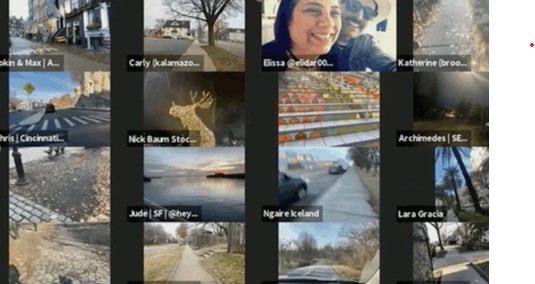
Figure 2. Image from Street Wisdom website (2024)
References
Amyot, Y. (2010) The Techno-Walker. In: Mullen, Cathy & Rahn, Janice (eds.) Viewfinding: Perspectives on New Media in the Arts. Peter Lang: New York
Balter, O. Hedin, B & Tobiasson, H (2015) Walking With Seminars. In: Scholarship of Teaching and Learning 2015. Available at: http://kth.diva-portal.org/smash/get/diva2:819447/FULLTEXT01.pdf (Accessed 19.7.2024)
Hannaford, C. (1995) Smart Moves: Why Learning is Not All in Your Head. Great Ocean: Arlington
Holmes, R. (2016) [Excerpts from Journal entries. [February 2016]
Oppezzo, M. & Schwartz, D. (2014) Give Your Ideas Some Legs: The Positive Effect of Walking on Creative Thinking. Journal of Experimental Psychology: Learning, Memory, Cognition. 40(4), 1142-1152
Roelstraete, D. (2010) Richard Long: A Line Made By Walking. Afterall Books: London
Solnitt, R. (2001) Wanderlust: A History of Walking. Granta Publications: London
Illustrations:
Figure 1. Alys, Francis (2004-5) Untitled [painting] In: Alys, Francis, Seven Walks: London 2004-5. London: Artangel
Figure 2. Image from Street Wisdom website (2024) https://www.streetwisdom.org/ (accessed 19.7.2024)
 Contemplative Pedagogy Network
Thanks Rosie.
Wonderful! I did my first in-person Wonder and Wander last year, and was very impressed at how enjoyable and worthwhile it was. So I am totally sold on the general idea, the principles and potential benefits.
Could I ask you, please, about the technicalities and practicality of doing it virtually, of having a Zoom connection rather than physically walking with another person.
I ask this as a Safety Officer. When walking the streets I am constantly cringing at how disconnected from myself and other road users are people whose eyes are glued to a screen!
Perhaps you could share your practical instructions and tell us a little bit about how you can do a zoom walk safely.
thanks
Keith
LikeLiked by 1 person
Hello Keith! It’s good to hear your enthusiam and interest in this. To be honest, the image above that shows lots of videos being held up to film the way ahead may be slightly misleading. When I have participated in these walks I have mostly either had the phone in my pocket on audio only (with headphones) OR had the video on just for short periods to get that visual sense of walking with others in different locations. Even doing the latter, I found that I was mostly not really looking at the screen much. This way, the zoom call (through verbal instuctions from the facilitator) is really just supporting and guiding particiapnts to tune into their senses, surroundings and inner experience rather than the phone. In fact, more mindfulness of surroundings and other people is cultivated (rather than being lost to the habitual contents of my thinking mind which can often be the case) which arguably safer than usual?
I would suggest joining an online Street Wisdom walk and see how you find it from a safety point of view?
From a technical point of view, the main challenge is remaining connected to the zoom call if walking rurally. I can see why the initial idea was for urban/city walking.
I hope this is helpful?
Rosie
LikeLike
Thanks Rosie. Yes, it did occur to me that the whole point of the exercise is to be more mindful, more aware. When I’m running Health & Safety training, this is always something I encourage! If this is the focus, and the technology is to enable and support such an approach, then we’re probably going to be OK.
LikeLike